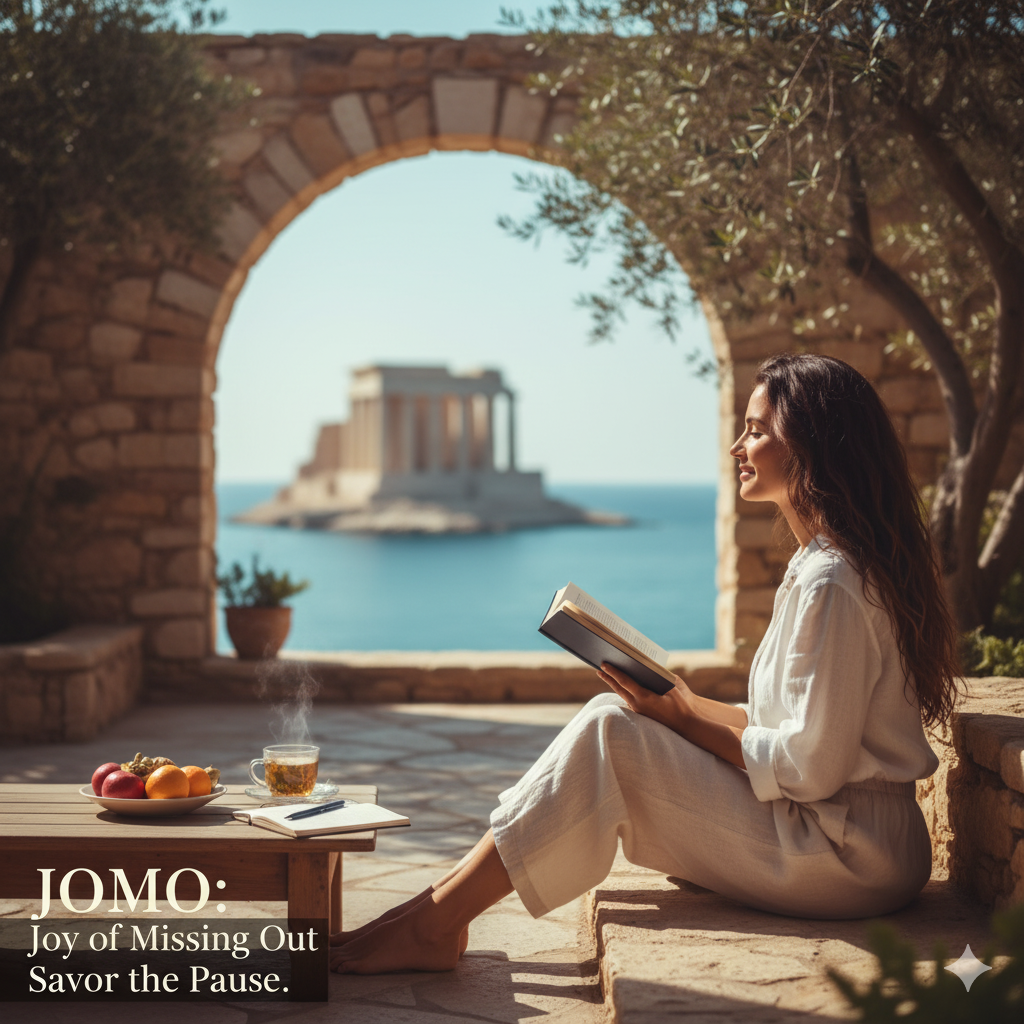
For many years, tourism was sold as an endless stream of “wow experiences”: dozens of excursions in a few days, packed itineraries, and the obligatory photo at every landmark. But travelers have grown tired. Instead of racing through checklists, they are making a conscious choice — finding joy in opting out and allowing themselves to skip the excess. This is giving rise to a new philosophy of leisure: JOMO (Joy of Missing Out).
Why Travelers Are Choosing JOMO Over FOMO
Modern life has instilled in people the habit of always being “connected”: responding, watching, reacting. This created the effect of FOMO — the fear of missing out. Yet the constant stream of information has become a source of anxiety and fatigue. The response has been the JOMO movement: instead of trying to do everything, the choice is for simplicity, silence, and genuine emotions.
In travel, this manifests as a new type of vacation: without crowds, without Wi-Fi, and without the endless chase for “content.” Travelers increasingly seek not to tick off items on a checklist, but to find moments of inner peace.
For many years, tourism was marketed as an endless flow of “wow experiences”: dozens of excursions in a few days, packed itineraries, and the obligatory photo at every landmark. But travelers have grown tired. Instead of racing through checklists, they are making a conscious choice — finding joy in opting out and allowing themselves to skip the excess. This is giving rise to a new philosophy of leisure: JOMO (Joy of Missing Out).
In travel, this manifests as a new type of vacation: without crowds, without Wi-Fi, and without the endless chase for “content.” Travelers increasingly seek not to tick off items on a checklist, but to find moments of inner peace.
For many years, tourism was marketed as an endless flow of “wow experiences”: dozens of excursions in a few days, packed itineraries, and the obligatory photo at every landmark. But travelers have grown tired. Instead of racing through checklists, they are making a conscious choice — finding joy in opting out and allowing themselves to skip the excess. This is giving rise to a new philosophy of leisure: JOMO (Joy of Missing Out).
JOMO: The New Mainstream of Mindful Travel

The philosophy of JOMO combines slow travel, wellness retreats, ecotourism, and digital detox. Travelers are making conscious choices, such as:
Even idleness takes on a new meaning: doing nothing becomes a legitimate form of rest and relaxation.
- secluded retreats;
- nature walks instead of guided tours;
- reading a book by the fireplace instead of endless scrolling;
- a day without plans instead of rushing through ten “must-see” spots.
Even idleness takes on a new meaning: doing nothing becomes a legitimate form of rest and relaxation.
Innovative Ways to Relax and Travel
- Monastering — living by ascetic rules, where simple daily tasks and silence replace usual services.
- Disconnected retreats — complete disconnection from gadgets and work, with time dedicated to meditation and rejuvenation.
- Quiet tourism — trips to small towns where the main value is a slow pace and local atmosphere.
- Izbing — immersion in traditional village life, with wood stoves, yokes, and old customs.
- Glamping — nature-based stays without sacrificing comfort, but free from digital noise.
- Solo travel — journeys alone for self-discovery and freedom from others’ expectations.
All these forms of travel share one principle: they allow people to switch off the “experience production” mode and truly rest.
Turning Silence into Revenue: Trends in Mindful Tourism
JOMO opens a new niche. Hotels, resorts, and tour operators need to rethink their offerings:
The JOMO traveler is willing to pay more not for the quantity of services, but for their true value. They seek not entertainment, but emotional restoration.
- Create detox packages — combining silence, nature, rest, and light activities (yoga, workshops, hiking).
- Limit technology — Wi-Fi-free zones, “check in your device at reception” options, screen-free spaces.
- Enhance the atmosphere — wooden cabins, campfires, simple meals, libraries instead of TVs.
- Offer flexibility — short weekend detoxes or week-long (or longer) retreats.
- Use marketing wisely — promote with keywords like “silence,” “detox,” and “relax,” rather than promises of “maximum experiences.”
- Develop clusters — connect glamping sites, retreats, and wellness centers into unified “quiet” itineraries.
The JOMO traveler is willing to pay more not for the quantity of services, but for their true value. They seek not entertainment, but emotional restoration.
Summary: The Rise of Mindful Tourism
JOMO is not a passing trend, but a shift in the way we perceive leisure. While speed and packed schedules were once valued, the focus now is on depth and meaningful experiences.
For the tourism industry, this presents a challenge: the old logic of “more services equals higher revenue” no longer applies. Success will now favor those who can sell not quantity, but quality — the chance to finally experience true silence.
For the tourism industry, this presents a challenge: the old logic of “more services equals higher revenue” no longer applies. Success will now favor those who can sell not quantity, but quality — the chance to finally experience true silence.